Maxwell Continuum
ELECTROMAGNETIC FIELD MODELING & CONTINUUM CONTROL
MAXWELL CONTINUUM
Maxwell Continuum supplies the field grammar that the rest of the machine-building network engineers with. Two flagship product lines: the Soliton Block, a diamond optical parametric oscillator paired with a programmable spectral filter that produces any laser wavelength from a single chassis; and the Continuum simulation stack, a coupled multiphysics solver that runs Maxwell, Navier-Stokes, plasma-kinetic, and thermal models together at design cadence. Both products exist because the field-shape solutions required by the network's flagship machines — Lorentz Aerospace's plasma envelope, Highfield Magnetics's coil geometry, Stellar Furnace's confinement, Matter Kitchen's phased-array RF, Plasma Press's pulse path — cannot be sourced from off-the-shelf simulation tools.
Conventional engineering treats fields as analyses, not as design objects. The Maxwell Continuum thesis is that fields are the design object: a coil is the means, a magnetic geometry is the end; a laser is the means, a programmable photonics envelope is the end; a phased array is the means, a controlled three-dimensional energy distribution is the end. The discipline ships the tools that make field-as-design tractable.
The field is the design object. We sell the tools that let other companies treat it that way.
01 — The Discipline
DISCIPLINE OVERVIEW
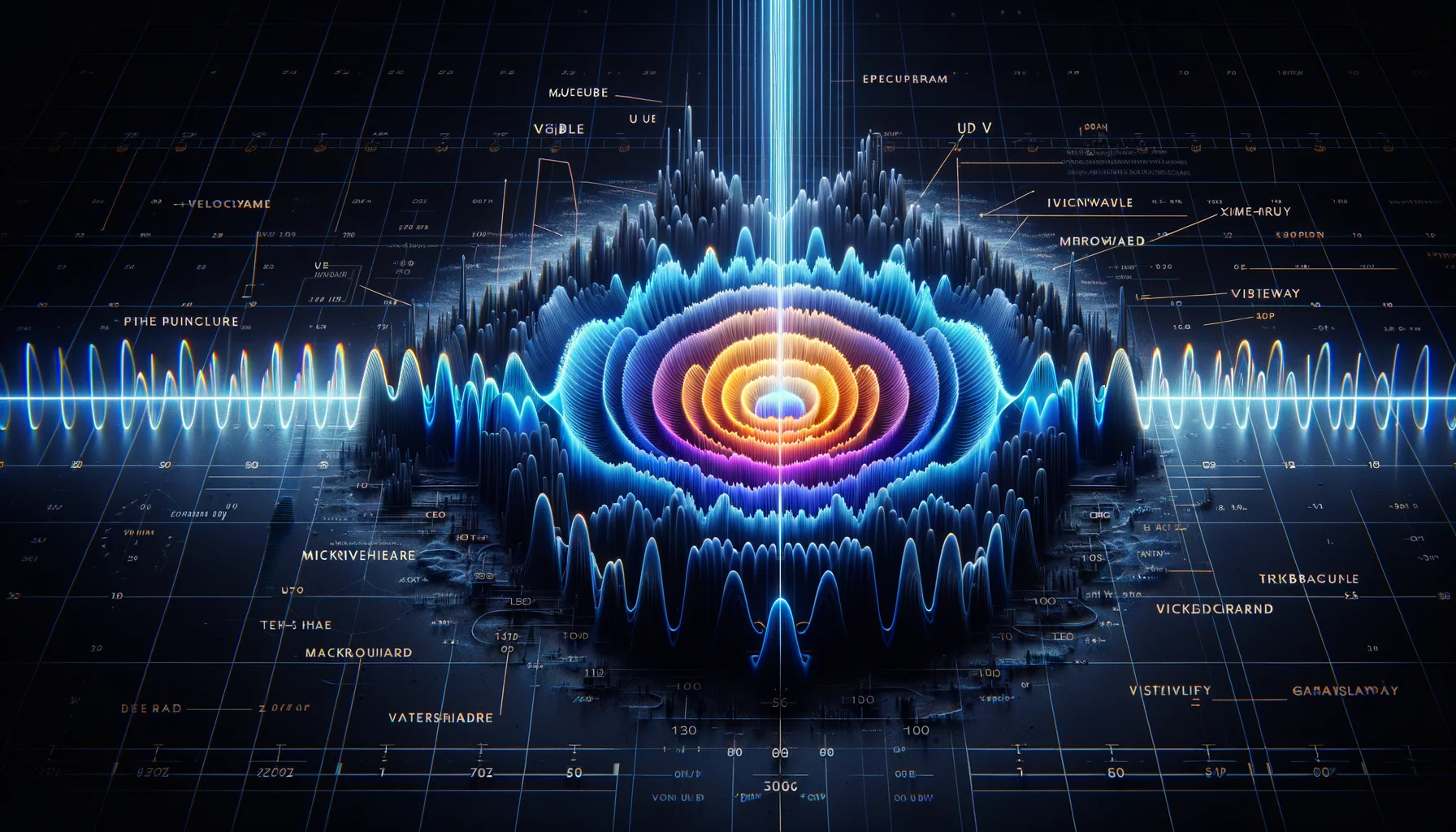
An electromagnetic field is a continuous function of space and time that obeys Maxwell's equations subject to material boundary conditions. In a vacuum the field is straightforward; in matter, the field couples to charges, currents, dielectric polarisation, magnetic moments, free-electron plasmas, and induced thermal expansion. The full coupled problem is the “continuum”: a non-linear, non-local, multi-physics evolution where a magnetic-field change drives a current, the current drives a force, the force drives a deformation, the deformation changes the boundary condition, and the boundary condition changes the field. Solving the continuum is what the discipline does.1
Conventional electromagnetic engineering uses a single-physics simulator (an antenna solver, a magnetostatic finite-element code, a circuit simulator, a beam-optics tracer) and treats the coupling to other physics as a hand-off problem. The hand-off introduces stale data, inconsistent boundary conditions, and per-physics-team optimization that no one solver can reconcile. The Maxwell Continuum simulator class addresses this by integrating the coupled physics within a single discretisation: Maxwell solvers and Navier-Stokes solvers exchange state at the field-and-matter interface every timestep, plasma-kinetic models feed self-consistent conductivity into the Maxwell stage, thermal models receive ohmic dissipation as a source term in real time.2
The discipline of Maxwell Continuum is the construction and operation of that coupled simulator at design cadence (millisecond updates per timestep for control loops, hours-of-wall-clock for design iteration). The simulator is the upstream of the field-as-design-object discipline; the Soliton Block product line is the downstream embodiment of the same principle in hardware. Both halves are how the company sells the field-grammar capability.
02 — The Bottleneck
EM SPECTRUM BANDS
Conventional engineering fails when fields, heat, fluids, structure, and control are designed in isolation. The classic failure mode is the high-power microwave system whose antenna designer optimises the radiation pattern, whose thermal engineer designs the heat-rejection assuming the antenna's nominal duty cycle, and whose control engineer sizes the actuator response to the antenna's small-signal bandwidth — only to discover in test that the coupled system oscillates because the antenna's actual operating duty cycle deforms the heat sink, the deformed heat sink changes the antenna's resonant frequency, and the control loop chases the moving resonance until something burns. Every term in the engineering chain was individually correct; the coupling killed the system.3
Multiphysics simulation as a discipline emerged in the late 1990s to address this exact failure class. Major commercial codes (COMSOL, ANSYS Multiphysics) ship with the right framework but with prohibitive licensing costs, slow design-iteration cycles, and limited support for the specific physics combinations the high-energy industrial systems need. The Maxwell Continuum simulator is engineered as the in-house alternative for the network's machine-builders: faster, deeper, and tuned to the specific coupled-physics combinations the customer applications demand.4
The deeper bottleneck is photonics hardware. A typical laser system serves one wavelength at one duty cycle at one beam geometry; changing any one requires swapping the gain medium, retuning the cavity, or building a new system. The hardware itself is the constraint on field-shape engineering in the optical domain. The Soliton Block product line addresses this by making the wavelength, duty cycle, and pulse shape themselves into programmable parameters of a single hardware platform — a photon foundry rather than a fixed laser.
03 — Field Architecture: The Soliton Block
FIELD GENERATOR
The Soliton Block is the flagship hardware product. It is not a laser. It is a programmable photonics platform: a single chassis whose output wavelength, pulse duration, repetition rate, and beam geometry are all software-controlled.5
A diamond optical parametric oscillator forms the core. CVD synthetic diamond crystals have the broadest transparency window of any solid material (220 nm to 4 µm) plus the highest thermal conductivity of any solid (about 2000 W/m·K). These two properties together mean a single diamond OPO can be tuned across the entire visible-and-near-infrared optical spectrum without thermal damage at industrial power levels.
A femtosecond mode-locked master oscillator seeds the OPO. A femtosecond pulse is not a single frequency — it is a million frequencies packed together in a coherent comb. Each tooth of the comb is a perfectly stable, perfectly known frequency. The Soliton Block's programmable spectral filter selects any tooth (or any combination of teeth) on demand. Wavelength selection becomes a configuration choice, not a hardware modification.6
The Soliton Block ships with pre-calibrated operational modes. Each mode configures wavelength, pulse duration, average power, and beam geometry for a specific industrial task: CUT mode (1064 nm continuous, 1 kW, for 50 mm steel plate machining), ABLATE mode (355 nm, 1 ps, 10 W, for Plasma Press Polymer-V carbonization), IGNITE mode (351 nm, 5 ns, 10 MJ pulse, for fusion target pre-ignition support to Stellar Furnace), LINK mode (1550 nm, narrow line, for long-baseline optical communication), and DIAGNOSE mode (broadband, programmable, for in-situ material characterisation).
One Soliton Block produces 100 kW. Sixty-four phase-locked Soliton Blocks in coherent superposition do not produce 6.4 MW of incoherent output — they produce a single diffraction-limited beam with the brightness of 6.4 MW from a single aperture. Applications: long-baseline optical communication links, ground-to-space laser power transmission, precision deep-space radar. The phase-locking precision is set by the same femtosecond master oscillator that drives each individual unit.7
04 — Coupled Simulation Stack

HARD LIGHT BARRIER
The Continuum simulator is the software half of the discipline. Five physics modules run inside a single discretisation, exchanging state every timestep:
Maxwell solver. Finite-difference time-domain on a structured grid for the electromagnetic field. Standard physics; the engineering work is the parallelization across thousands of compute cores at the cadence the design loop demands.8
Navier-Stokes solver. Compressible-flow physics for atmospheric flight, vacuum-chamber transient gas dynamics, and brine-flow inside the Phase Flash chamber. The same discretisation grid carries the fluid state and the Maxwell state — the boundary condition at the fluid-conductor interface is computed self-consistently at every timestep.
Plasma-kinetic solver. Particle-in-cell or fluid-MHD model for ionised flows. Plasma conductivity feeds back into the Maxwell solver; field-shape feeds forward into the plasma trajectory. This is the simulator class that drives the Lorentz Aerospace plasma-envelope design and the Stellar Furnace dense-plasma-focus modelling.9
Thermal solver. Heat conduction with ohmic-dissipation source terms from the Maxwell solver and convective heat transfer to the Navier-Stokes flow. The deformation of structural components under thermal load is fed back as a moving boundary in the Maxwell mesh.
Control-loop integrator. Closed-loop control simulation: the simulated sensor readings produced by the four physics solvers are fed into the customer's control law, the control law produces actuator commands, the actuator commands modify the boundary conditions for the next timestep. The whole loop is verified inside the simulator before being shipped to silicon.
The five-solver stack is the engineering basis of the field-as-design discipline. Customers ship their machine geometries, material properties, and control laws into the simulator; the simulator returns coupled-physics state evolution at design-iteration cadence; design choices that pass in the simulator have a defensible chance of working in hardware. Without coupled simulation, every design iteration is hardware-only and an order of magnitude slower.
05 — Control Surfaces Without Surfaces
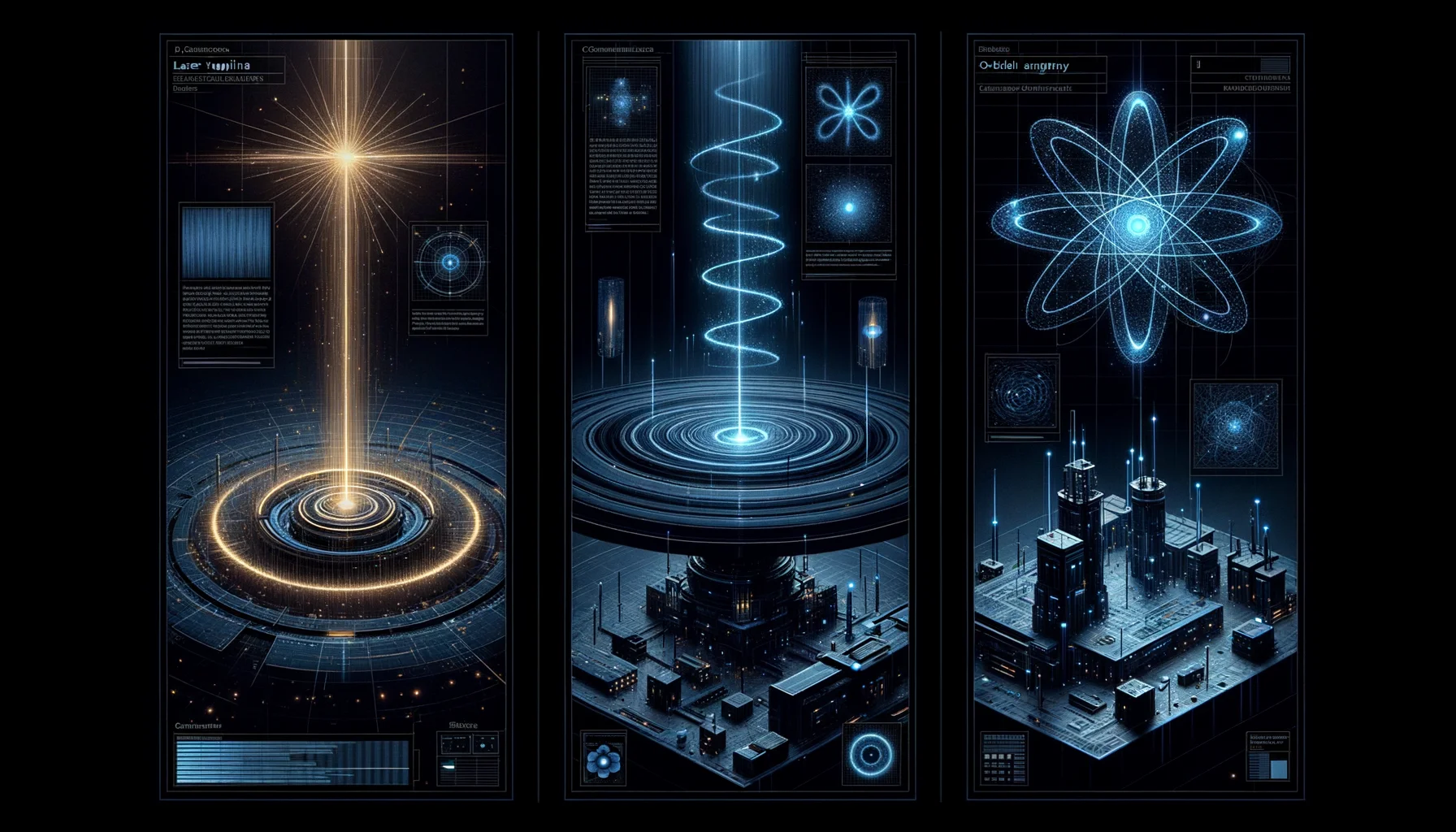
INTEGRATION MAXWELL
The architectural punchline of both the Soliton Block and the Continuum simulator is the same: a controlled field is a control surface, even when no mechanical surface exists. The seven existing machine-building disciplines on the network all depend on this principle for their flagship machines:
Each of these machines is field-controlled rather than mechanically-controlled at its core operation. The Continuum simulator is the only practical way to design them, because the field-shape must be solved against the coupled physics that the field itself drives. The Soliton Block is the optical-domain instance of the same principle: the laser output is field-shaped programmatically rather than locked to a single fixed cavity geometry.
The competitive position of Maxwell Continuum across the network is therefore the same as Highfield Magnetics's position relative to coil-based systems and Polymer Press's position relative to polymer substrate: every machine that needs field-shape control bought from a peer eventually buys it here.
06 — Supplier & Integration Partners
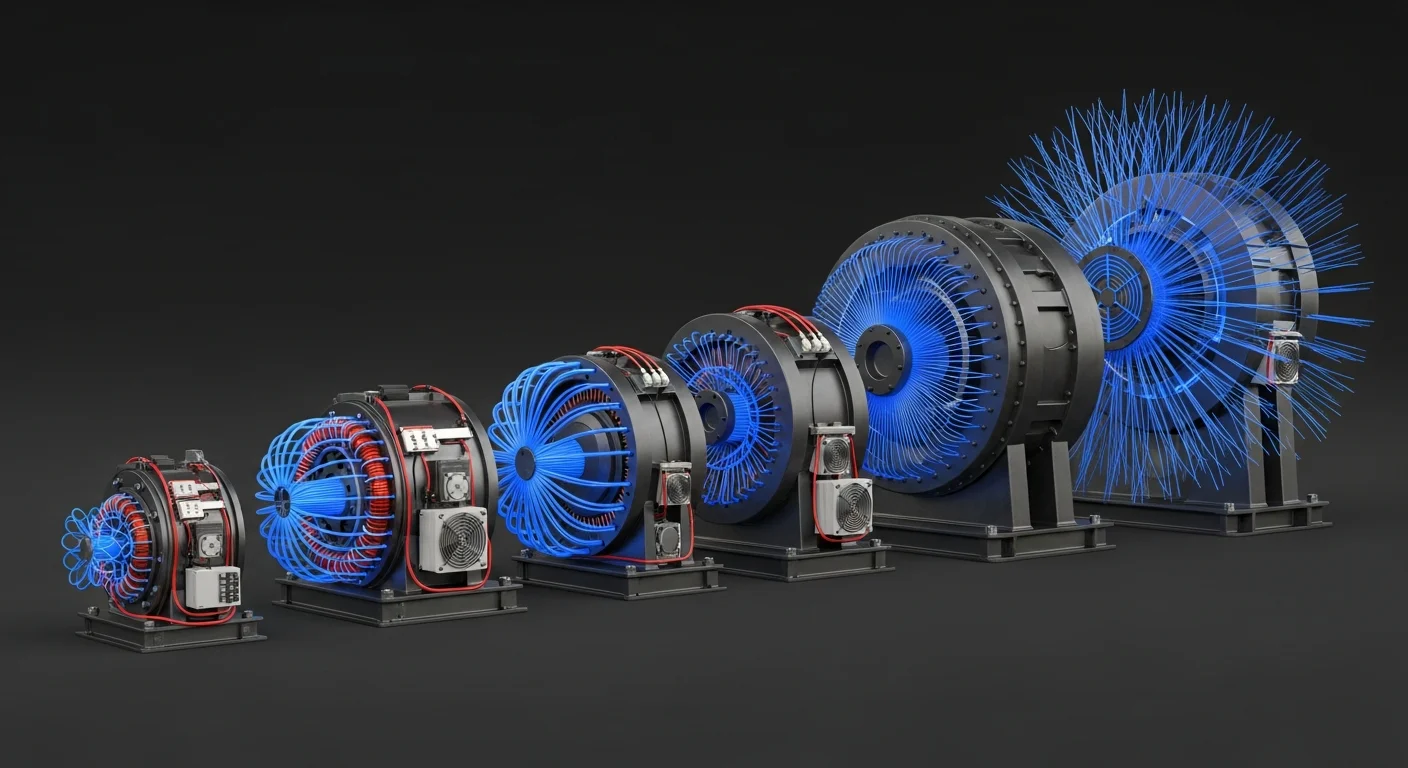
POWER TIER TOWER
Maxwell Continuum ships into seven peer companies as the field-modelling and programmable-photonics provider. Its outputs feed the flagship products of the network's other machine-builders.
Highfield Magnetics — Coil-field maps and stability simulations for the Iron Horse twenty-tesla and God Magnet one-hundred-tesla product lines. Joint development of inductive wireless-charging architectures using the same REBCO HTS technology that ships in the Iron Horse.
Lorentz Aerospace — The Continuum simulator drives the XR-1 plasma-envelope design. Field-shape solver runs at one megahertz during in-flight control. Sixty-gigahertz gyrotron diagnostic suite for in-flight envelope state estimation.
Stellar Furnace — Plasma-kinetic simulation of the SF-1 dense plasma focus compression. Direct-conversion field geometry optimization. Soliton Block IGNITE mode supplies the pre-ignition pulse for the proton-boron fuel cycle.
Matter Kitchen — RF and thermal uniformity simulation for the 256-element GaN phased array. The inverse-Maxwell design solver that produces the per-element phase pattern for the One-Second Cake is Continuum-stack software.
Phase Flash — Phase-boundary and vapor-dynamics simulation for the Oasis chamber. Continuum's coupled Maxwell-Navier-Stokes-thermal model runs the chamber design loop.
Plasma Press — Soliton Block ABLATE mode is the femtosecond pulse train of the One-Second Book platform. Diffractive pulse splitter (32-channel) is co-developed.
Aetheric Sciences — Photonic computation hardware shares the same femtosecond mode-locked clock technology. Joint development of the photonics-to-electronics interface for low-latency edge compute.
Metallic Sciences — Bus bar stock for Soliton Block power delivery. Diffusion-bonded copper-diamond heat-sink stack for the high-power Soliton Block variants.
Polymer Press — Optical-grade Polymer-V variants for diagnostic windows and beam-shaping elements in the Soliton Block.
Highfield Magnetics → Lorentz Aerospace → Stellar Furnace → Matter Kitchen → Phase Flash → Plasma Press → Aetheric Sciences → Metallic Sciences → Polymer Press →
07 — Validation Hooks

RESEARCH HORIZON
Four measurable claims define the forward roadmap. Each is intended to be a future Crystal Ball-grade prediction registration once the prediction infrastructure exists.
HOOK A — Continuum simulator coupled-physics accuracy. The Continuum simulator's coupled Maxwell-MHD-thermal-control physics produces predictions whose deviation from in-hardware measurement is the operational accuracy metric. The current state is approximately ten percent on integrated quantities (peak field, peak temperature) across representative customer test cases. The forward target is below three percent on integrated quantities and below ten percent on local-quantity peak values. A demonstration of sustained sub-three-percent accuracy across the five-physics test battery is the gating measurement.10
HOOK B — Soliton Block mode-switch time. The current spectral filter takes about ten milliseconds to reconfigure to a new wavelength. The forward target is one millisecond, enabling within-pulse-train mode switching for applications that need wavelength agility at production cadence (Plasma Press multi-layer ablation, multi-target manufacturing cells). A demonstration of one-millisecond mode switching with sub-percent power-stability on the new mode is the gating measurement.
HOOK C — coherent array phase-locking precision. The current sixty-four-unit Soliton Block array maintains phase coherence at about lambda-over-twenty precision. The forward target is lambda-over-one-hundred, which expands the diffraction-limited brightness by a factor of twenty-five at long range. Demonstration of sustained lambda-over-one-hundred over one-hour operation at design-power is the gating measurement.11
HOOK D — differentiable-physics design optimisation. Today's Continuum simulator runs forward-physics simulation. The next-generation target is a fully differentiable coupled-physics stack — the simulator computes gradients of any output quantity with respect to any input parameter (coil geometry, material property, control law), enabling true inverse-design optimisation. Demonstration of an inverse-design problem solved end-to-end (specify desired field shape, simulator returns coil geometry that produces it) at engineering cadence is the gating measurement.12
RESEARCH REPOSITORY
Electromagnetics, plasma physics, magnetohydrodynamics, multiphysics simulation, control theory, and programmable photonics.
Maxwell Continuum is the engineering of electromagnetic fields as design objects. Two flagship product lines — the Soliton Block programmable photonics platform and the Continuum coupled-multiphysics simulator — ship into the network as the field-grammar capability that machine-building disciplines depend on. The discipline rests on the principle that fields are control surfaces even when no mechanical surface exists; the network's flagship machines are all field-controlled at their core operation, and Continuum is the only practical way to design them.
(wiki) Maxwell's Equations • (wiki) FDTD • (wiki) Permittivity • (wiki) Method of Moments
Reference Links — Plasma & MHD(wiki) Plasma Physics • (wiki) Magnetohydrodynamics • (wiki) Particle-in-Cell • (wiki) Gyrotron
Reference Links — Multiphysics & Control(wiki) Multiphysics Simulation • (wiki) Control Theory • (wiki) Inverse Problem • (wiki) Differentiable Physics
Reference Links — Programmable Photonics(wiki) Optical Parametric Oscillator • (wiki) Mode-Locking • (wiki) Frequency Comb • (wiki) Coherent Beam Combining
- Jackson, J.D. Classical Electrodynamics. 3rd Ed. Wiley, 1998. ISBN 978-0-471-30932-1.
- Chen, F.F. Introduction to Plasma Physics and Controlled Fusion. 3rd Ed. Springer, 2016. ISBN 978-3-319-22308-7.
- Davidson, P.A. An Introduction to Magnetohydrodynamics. 2nd Ed. Cambridge Univ. Press, 2017. ISBN 978-1-107-16016-3.
- Boyd, R.W. Nonlinear Optics. 4th Ed. Academic Press, 2020. ISBN 978-0-128-11002-7.
- Taflove, A. & Hagness, S.C. Computational Electrodynamics: The Finite-Difference Time-Domain Method. 3rd Ed. Artech House, 2005. ISBN 978-1-580-53832-9.
- Udem, T. et al. "Optical frequency metrology." Nature 416, 233–237 (2002). The reference paper for the frequency comb metrology that the Soliton Block seed clock is based on.
- Birdsall, C.K. & Langdon, A.B. Plasma Physics via Computer Simulation. CRC Press, 2004. ISBN 978-0-7503-1025-9. PIC-method foundational reference.
- Schillinger, B. et al. "Diamond optical parametric oscillators." Opt. Express 21, 28252 (2013). Diamond-OPO foundational engineering reference.
- Brizard, A.J. & Hahm, T.S. "Foundations of nonlinear gyrokinetic theory." Rev. Mod. Phys. 79, 421–468 (2007). Gyrokinetic plasma simulation foundation.
- ● Coupled electromagnetic continuum: standard physics. Maxwell's equations + material constitutive relations + boundary conditions; the discipline is solving them at engineering cadence.
- ● Single-discretisation multiphysics coupling: theoretical and partially demonstrated in commercial codes; the Continuum simulator's specific physics combinations and timestep cadences are engineering targets.
- ● Coupled-system failure mode (antenna+thermal+control oscillation): standard system-engineering case study; documented in multiple high-power microwave system failures.
- ● Continuum simulator vs commercial multiphysics: engineering program differentiator. Faster + customer-application-tuned + in-house licensing.
- ● Soliton Block programmable photonics: engineering program. Diamond OPO + frequency-comb seeding are individually demonstrated; productization at industrial scale is the work.
- ● Femtosecond-comb wavelength selection: standard frequency-comb metrology. The Soliton Block productionises this principle for industrial use.
- ● Sixty-four-unit coherent array: theoretical based on standard coherent-beam-combining principles; demonstrated at smaller array sizes; scaling to 64 units is the engineering target.
- ● FDTD Maxwell solver: standard computational electromagnetics. Massive parallelisation is industrial practice.
- ● Particle-in-cell + fluid-MHD hybrid: standard plasma simulation. Coupling to a structured Maxwell mesh at design cadence is the engineering scope.
- ● Sub-three-percent simulator accuracy: engineering target. Current 10% accuracy is industry-baseline; below-3% requires improved coupling, finer discretisation, and validated material models.
- ● Lambda-over-one-hundred phase locking: theoretical extension of demonstrated coherent-beam-combining precision. Engineering scope is the active phase-feedback infrastructure.
- ● Differentiable coupled-physics simulator: long-term speculative target. Per-physics differentiable solvers exist (e.g. PyTorch-based EM solvers); coupled five-physics differentiability is the frontier.